One of the pioneers of luxury hospitality, found themselves at a crossroads, “How can we give our guests an experience of nature in the midst of a city centre with peaking pollution and unheeded urbanization?”
Urbanization brings with it a unique set of issues to humans, the environment, and all businesses alike.

Hospitality, like other industries, has a responsibility to manage its impact on our planet and as such is expected to work in alignment with the UN’s Sustainable Development Goals.
Firefly’s holistic approach included enhancing aesthetics and customer experience while reducing air and noise pollution, conserving resources, and bringing down operational costs.
The Challenge
The 6500 sqft and 9200 sqft lawns that flanked the first floor of the hotel building had become casualties of urban development, and were in need of regeneration. For a healthy and welcoming guest-experience, a holistic, environmentally sensitive and protective ambience had to be created within the lawns.
The Opportunity for Change
Sustainable landscaping involves enhancing the aesthetics of a space while simultaneously creating positive impact through conserving energy and water, improving air and water quality, and enabling a habitat for local flora and fauna.
Individuals and corporations globally are prioritizing sustainability in travel. This rise in trend is an additional motivation for the hotel industry to provide services that conserve resources, reduce pollution and create positive environmental impact while retaining excellence in their hospitality services, and value for their stakeholders.
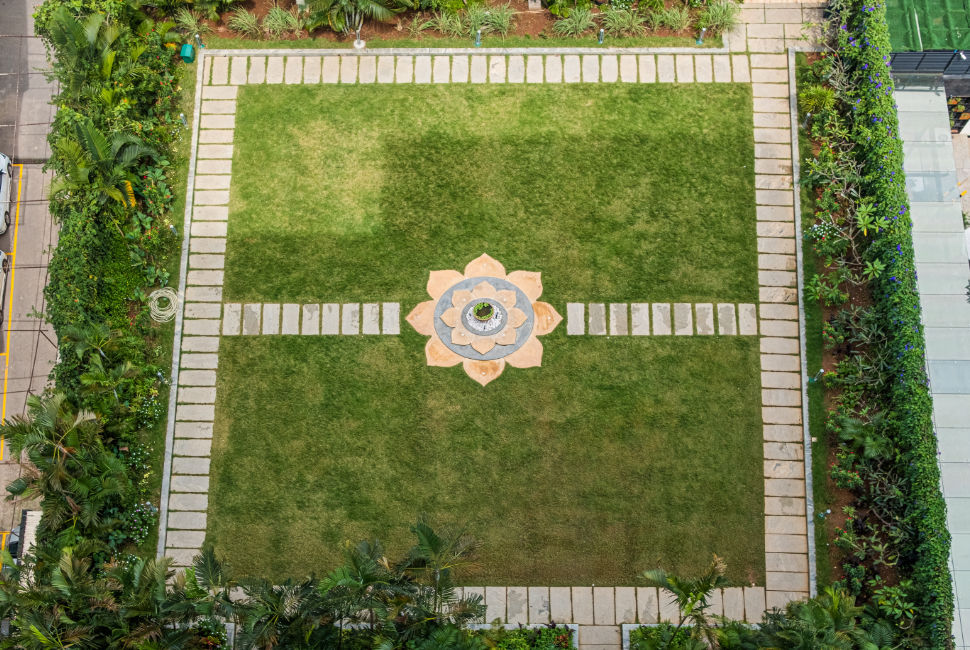
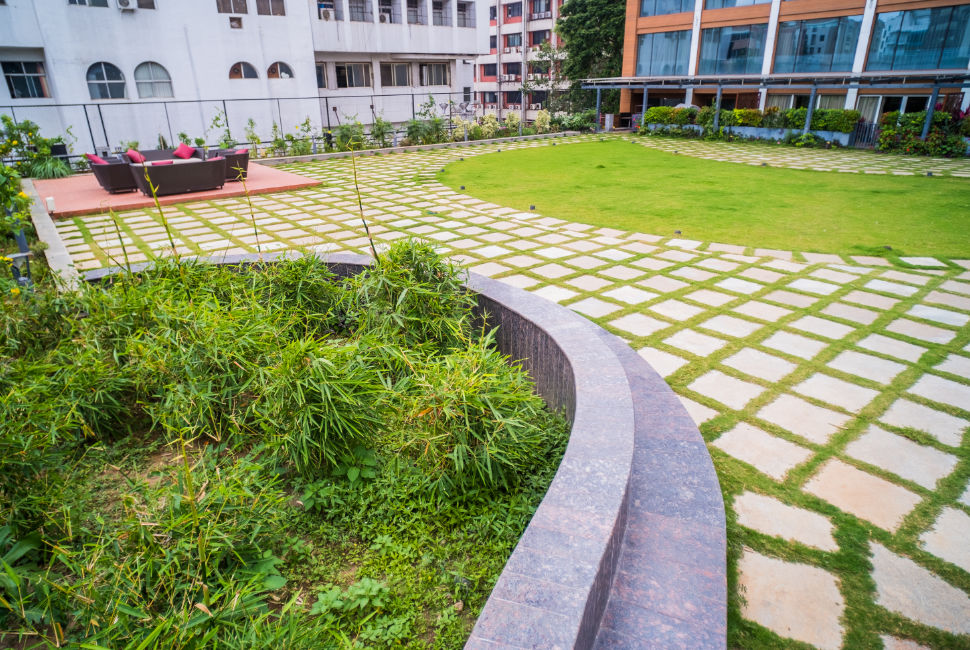
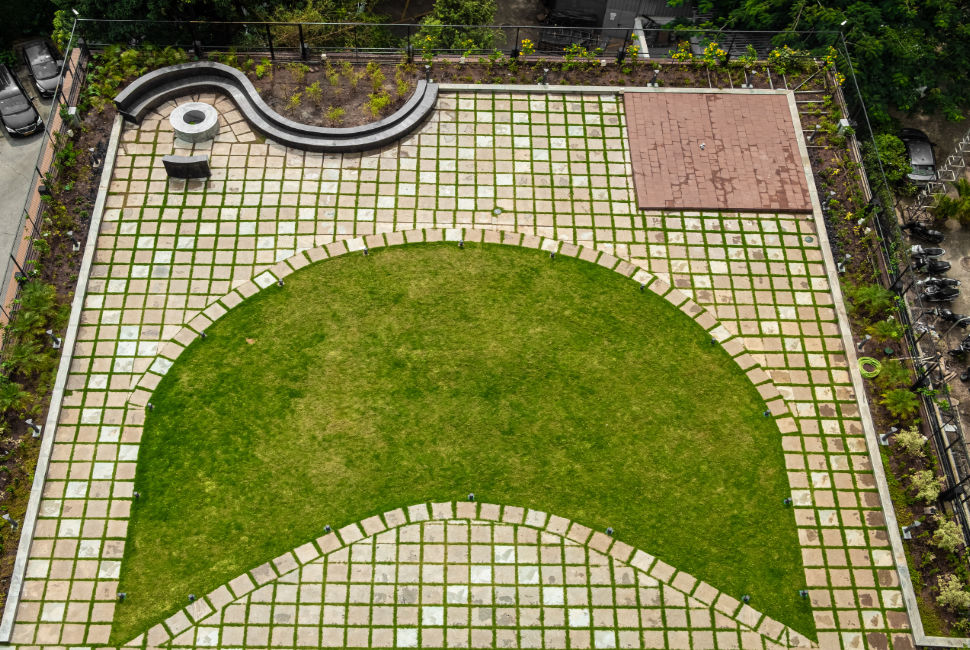
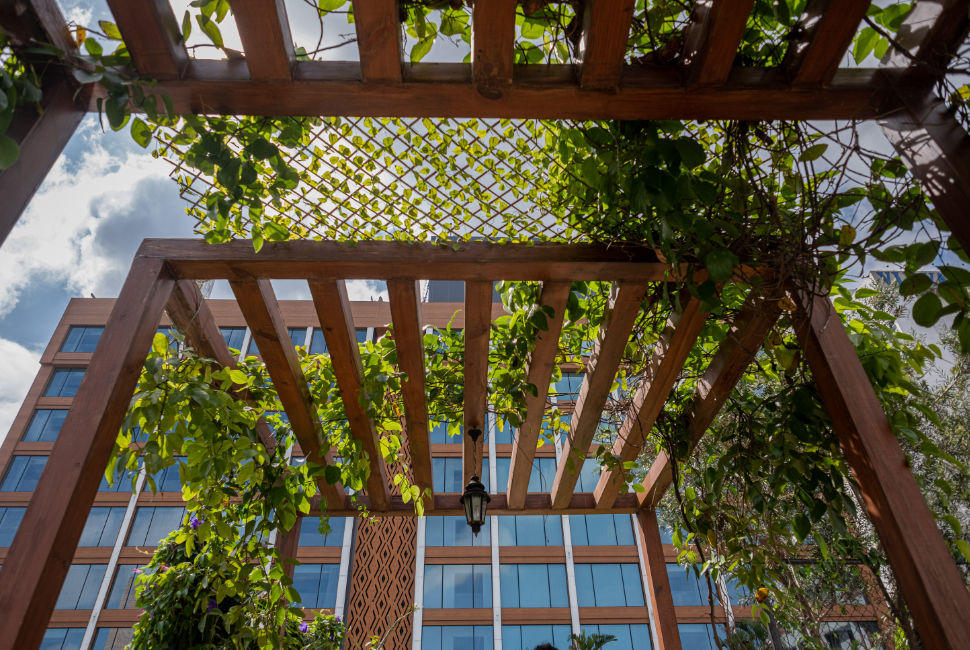
In pursuit of a unique guest-experience, the collaborative vision of Firefly and the client, paved the way for sustainable development while ensuring spectacular landscapes amidst a buzzing Bangalore-cityscape.
Strategic Aesthetic Design
Water Drainage & Harvesting
Reduced Capex and Operational Costs
Design Functionality
Guest-Experience
Property Value
Water Conservation
Water drainage problems were resolved and water harvesting of upto 15 lakh liters is done annually from the two lawns alone.
Environmental Impact
The soil and plants contribute daily to carbon sequestration, improving air quality, and bringing down local temperatures affecting the microclimate.
Related Case Studies